


Most mobile app marketers treat retargeting timing like a guessing game. Wait 7 days after a user goes dormant? Try 14? Maybe 30?
The standard approach involves setting arbitrary time windows based on industry benchmarks or gut feeling. Wait a week to retarget lapsed users. Hit them again after two weeks. Keep trying monthly until they return or you give up.
This one-size-fits-all approach ignores a fundamental reality: users don’t operate on standardized schedules. Some people are ready to return after three days. Others need three weeks. Many will never come back regardless of timing.
Getting retargeting windows wrong costs money in two ways. Reach users too early, and you waste impressions on people who aren’t ready to return yet. Wait too long, and you miss the optimal window when they’re most receptive. Either way, you’re burning budget on poorly timed campaigns.
Ad fatigue adds another dimension to this challenge. Even perfectly timed retargeting can backfire if users see your ads too frequently. The line between effective persistence and annoying spam is thinner than most marketers realize.
Neural networks address this complexity by analyzing individual user behavior patterns to determine optimal retargeting timing. These AI systems identify when specific users are most likely to return while avoiding the ad frequency that triggers fatigue. Instead of generic windows applied to everyone, each user gets individually optimized timing.

Traditional retargeting strategies rely on fixed time windows that treat all users identically. A gaming app might retarget all users who haven’t opened the app in 7 days. An e-commerce app might wait 14 days before launching re-engagement campaigns.
These standardized approaches ignore the reality that different users have completely different engagement patterns and return behaviors.
Consider two users who both became dormant at the same time. User A typically downloads apps enthusiastically, uses them intensively for a few weeks, then gradually reduces engagement before stopping entirely. User B installs apps casually, uses them sporadically across months, and often returns after long dormant periods.
Standard retargeting hits both users with identical timing and frequency. But User A needs early intervention—ideally before they fully disengage. User B actually responds better to longer windows because they naturally cycle through periods of usage and dormancy.
Seasonal and contextual factors further complicate timing decisions. A fitness app user who goes dormant in December might return naturally in January with New Year’s resolutions. Retargeting them in late December wastes budget on someone who was already planning to return. But another user who goes dormant in June might need immediate retargeting because summer typically represents their peak usage period.
Platform algorithm considerations affect retargeting effectiveness beyond just timing. When users don’t respond to retargeting ads, advertising platforms interpret this as poor campaign performance and reduce future ad delivery while increasing costs. Poorly timed retargeting doesn’t just waste immediate budget—it damages long-term campaign economics.
Attribution challenges make it difficult to measure true retargeting effectiveness. When a user returns several days after seeing a retargeting ad, did the ad actually influence their return or were they going to come back anyway? Without understanding optimal timing windows, marketers can’t distinguish between effective retargeting and wasted spend on organic returns.

Modern AI systems analyze user behavior patterns to predict optimal retargeting timing for individual users rather than applying generic windows across entire audiences.
Historical engagement pattern analysis examines how users typically interact with mobile apps over time. Some users exhibit consistent daily usage patterns. Others use apps in weekly cycles. Many show irregular engagement with longer dormant periods between active phases. Neural networks identify these individual patterns and predict when each user type is most likely to be receptive to re-engagement.
Dormancy trigger identification helps determine why users stopped engaging. A user who gradually reduced usage over several weeks shows different return probability than someone who abruptly stopped using the app after intensive engagement. Understanding these patterns informs optimal retargeting timing.
Category-level behavioral insights leverage data from similar mobile apps to improve predictions. Users who become dormant in gaming apps often show different return patterns than users of productivity or social apps. Neural networks apply category-specific insights to individual timing predictions.
Device usage rhythms reveal personal patterns that affect receptivity to retargeting messages. Someone who typically uses their phone heavily in evenings but rarely during work hours has different optimal timing than someone with opposite patterns.
Seasonal behavior analysis identifies users whose engagement naturally fluctuates with seasons, holidays, or other temporal factors. Travel app users might naturally increase usage during summer vacation planning periods. Fitness app users often show New Year spikes followed by February declines.
Life event signals sometimes appear in behavioral data that suggests major changes affecting app usage. A user who suddenly shifts from frequent shopping app usage to zero engagement might have experienced a life change requiring longer retargeting windows or different messaging approaches.
Competitive app usage patterns provide context for understanding dormancy. When users simultaneously reduce engagement across multiple similar apps, they’re likely shifting interests or priorities. When they remain active in competitor apps while abandoning yours, they’ve likely found a preferred alternative.
Return probability scoring enables precise timing predictions. Rather than guessing whether to retarget at day 7 or day 14, neural networks calculate that a specific user has a 23% return probability at day 5, 42% at day 10, and 18% at day 20. This enables targeting during the actual peak probability window.
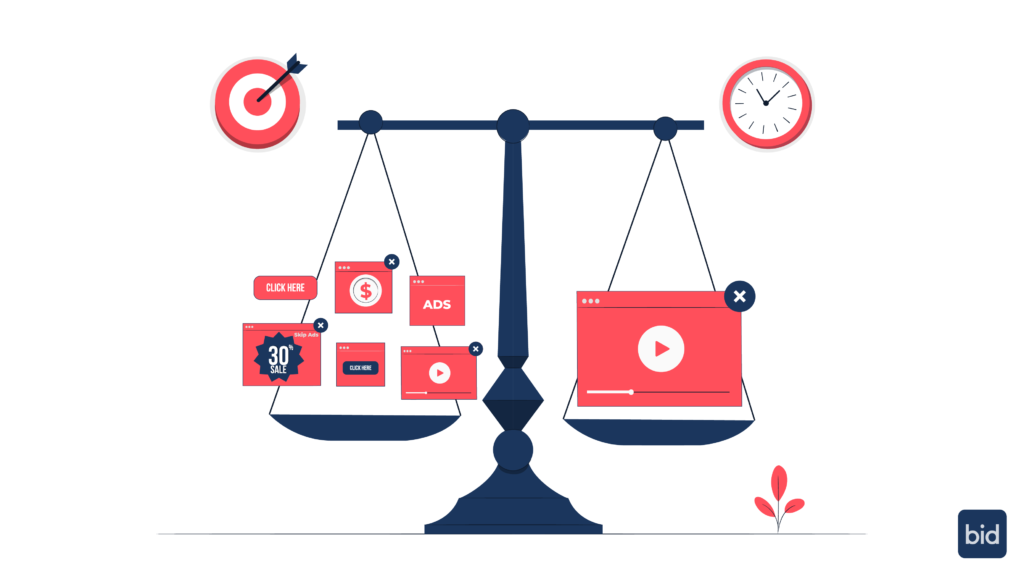
Optimal retargeting timing involves more than identifying when users are most likely to return. It also requires managing ad frequency to maximize effectiveness while avoiding fatigue.
Ad fatigue occurs when users see retargeting messages so frequently that they become annoyed rather than persuaded. The threshold where helpful reminders become irritating spam varies significantly by individual, app category, and creative approach.
Frequency thresholds differ dramatically across user segments. Users who actively engage with advertisements and frequently try new apps tolerate higher retargeting frequency than users who rarely click ads and show ad-avoidance behaviors.
Creative variation helps manage fatigue by ensuring users don’t see identical messages repeatedly. Bigabid’s platform optimizes which existing creative assets to show different users based on their behavioral patterns and previous ad interactions. By rotating through available creatives strategically, the system extends the effectiveness of retargeting campaigns before fatigue sets in.
Channel diversification spreads retargeting across different advertising platforms and placements. Users who see your retargeting ads across multiple platforms perceive less repetition than seeing identical ads repeatedly on a single platform.
Message progression strategies coordinate retargeting timing with evolving messaging approaches. Early retargeting might highlight general app benefits. Later attempts might emphasize new features or special offers. Final retargeting efforts might include win-back promotions.
Negative signals require quick response. When users actively hide ads, report them as irrelevant, or show other explicit avoidance behaviors, neural networks quickly adjust frequency and timing to prevent further fatigue.
Cross-campaign frequency coordination ensures that users don’t get overwhelmed by retargeting across multiple campaigns or app categories simultaneously. Portfolio-level frequency management prevents individual users from seeing excessive total ad volume even when individual campaign frequencies remain reasonable.

Neural network-driven retargeting timing optimization requires sophisticated technical infrastructure operating at scale across diverse user populations.
Behavior tracking systems must capture detailed engagement data that reveals individual usage patterns. Session frequency, duration, feature usage, and temporal patterns all contribute to timing predictions.
Predictive modeling processes historical behavior data to generate return probability curves for individual users. These models calculate likelihood of return across multiple potential retargeting windows rather than selecting a single static timeframe.
Real-time scoring systems continuously update predictions as new behavioral data becomes available. A user who shows preliminary signs of renewed interest—like opening push notifications or browsing app store listings—might trigger accelerated retargeting timing.
Automated campaign management systems implement timing predictions by dynamically adding or removing users from retargeting audiences based on predicted optimal windows. This automation enables individualized timing at scale without manual campaign management overhead.
Multi-armed bandit algorithms balance exploration and exploitation in timing strategies. While neural networks predict optimal timing based on historical patterns, some experimentation with alternative timing windows helps identify changing user behaviors and emerging patterns.
Attribution modeling connects retargeting timing with actual return events to validate prediction accuracy and inform ongoing model refinement. When users return shortly after retargeting ads versus returning after long delays following ad exposure, this feedback improves future timing predictions.
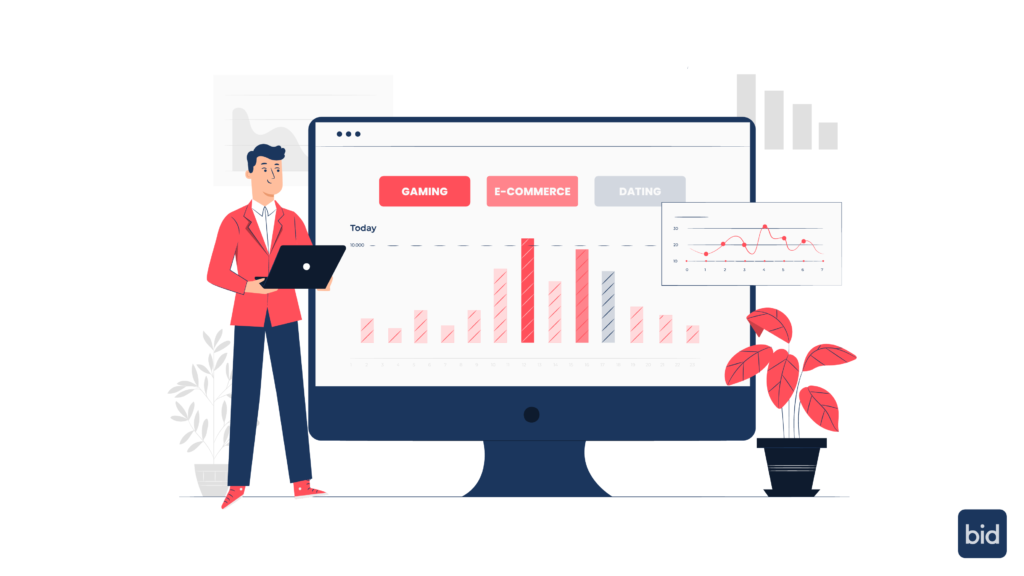
Optimal retargeting windows vary significantly across mobile app categories due to inherent differences in usage patterns and user expectations.
Gaming apps typically require faster intervention than other categories. Users who stop playing mobile games often move quickly to alternatives. Retargeting windows of 3-7 days frequently prove more effective than longer delays. However, hardcore gaming users might respond well to longer windows as they cycle through different games.
E-commerce apps show seasonal timing patterns that override individual user patterns during major shopping periods. Black Friday, holiday shopping, and category-specific seasons create universal optimal timing windows that apply broadly across user segments.
Social apps face unique challenges because users who stop engaging often do so because of negative experiences or shifting friend networks. Retargeting timing must balance quick intervention with allowing enough time for circumstances to potentially change.
Productivity apps benefit from work rhythm-aligned timing. Users who abandon productivity tools often do so during busy periods or vacation times. Retargeting aligned with return to normal work schedules often proves more effective than immediate re-engagement attempts.
Dating apps see strong day-of-week patterns that inform timing strategies. Weekend retargeting often shows different effectiveness than weekday campaigns, with optimal timing varying by user demographic and past usage patterns.
Fitness and wellness apps demonstrate clear seasonal and resolution-driven patterns. January timing strategies differ dramatically from summer approaches. Neural networks identify which users follow typical patterns versus those showing consistent year-round engagement potential.
Subscription apps require careful timing around free trial expirations and billing cycles. Retargeting users immediately after trial expiration often proves less effective than allowing a brief pause before re-engagement attempts.

Evaluating retargeting timing effectiveness requires measurement approaches that go beyond simple return rates and account for timing-specific factors.
Incremental return lift measures the true impact of retargeting by comparing users who received timed retargeting against control groups who either received no retargeting or received retargeting at different timing windows. This reveals whether optimized timing actually improves results versus alternative approaches.
Time-to-return analysis examines how quickly users return following retargeting exposure. Shorter time-to-return typically indicates more effective timing that reached users when they were genuinely ready to re-engage.
Cost-per-return metrics enable economic evaluation of timing strategies. More expensive retargeting that reaches users at optimal timing windows might deliver better overall ROI than cheaper retargeting with poor timing that generates lower return rates.
Long-term engagement quality assessment measures whether users acquired through optimally-timed retargeting show better subsequent engagement than those reached through generic timing approaches. Timing strategies should optimize for sustainable re-engagement, not just immediate returns.
Ad fatigue indicators including frequency of ad hiding, negative feedback, and declining click-through rates over time reveal whether timing and frequency strategies are successfully managing fatigue or pushing users toward active avoidance.
Prediction accuracy monitoring tracks how well neural network timing predictions match actual user behavior. When predicted optimal windows align with actual return patterns, this validates model effectiveness and justifies continued reliance on AI-driven timing.

Successfully implementing neural network timing optimization requires attention to both technical and operational factors.
Data infrastructure must support detailed behavioral tracking and real-time audience management. Historical engagement data, return event tracking, and continuous behavior monitoring enable accurate timing predictions.
Audience size considerations affect implementation approaches. Very small retargeting audiences might not provide sufficient data for individual-level timing optimization. Category-level or segment-level timing strategies might prove more practical for smaller campaigns.
Testing frameworks should validate timing optimization impact through controlled experiments. Incremental testing comparing optimized timing against fixed windows demonstrates actual value and builds organizational confidence in AI-driven approaches.
Creative asset inventory affects implementation because timing optimization works best when coordinated with strategic creative rotation. Sufficient creative variety enables extended campaigns without excessive repetition.
Platform capabilities vary across advertising channels. Some platforms support sophisticated real-time audience management while others require simpler approaches. Implementation strategies should account for platform-specific constraints.
Budget allocation frameworks must balance timing optimization with other campaign priorities. Optimal timing for individual users means nothing if budget constraints prevent reaching all users at their ideal windows.
Organizational alignment ensures marketing teams understand and support timing optimization strategies. Moving from fixed, easily understood windows to dynamic, individualized timing requires change management and clear communication of benefits.

Retargeting timing optimization continues evolving as neural network capabilities advance and user behavior patterns shift.
Predictive timing will likely advance beyond reactive dormancy response toward proactive engagement maintenance. Rather than waiting for users to become dormant before timing retargeting, future systems might identify users at risk of disengagement and intervene before dormancy occurs.
Cross-device timing coordination will enable unified timing strategies that account for user behavior across smartphones, tablets, desktops, and other devices. Optimal timing might vary by device for individual users.
Integration with product analytics will enable timing strategies informed by in-app behavior patterns beyond just usage frequency. Understanding which features users engaged with before dormancy can inform both timing and messaging strategies.
Privacy-adaptive timing strategies will maintain effectiveness as privacy regulations evolve and explicit behavioral tracking becomes more limited. Neural networks will need to generate accurate timing predictions from increasingly anonymized data.
Market condition awareness will enable timing strategies that account for broader trends affecting user behavior. Economic conditions, seasonal trends, and competitive dynamics all influence optimal retargeting timing.

Retargeting timing fundamentally affects mobile app re-engagement campaign success. Generic time windows waste budget on poorly timed outreach while missing optimal engagement opportunities.
Neural networks transform timing from guesswork into data-driven precision by analyzing individual user patterns to identify when each user is most likely to return. This individualized approach maximizes reactivation probability while managing ad frequency to prevent fatigue.
Bigabid’s neural network platform analyzes user behavior patterns to optimize retargeting timing for individual users. The system identifies optimal engagement windows while coordinating creative selection to maintain campaign effectiveness across extended retargeting periods.
Marketing teams using AI-driven timing optimization achieve higher return rates, better cost efficiency, and improved long-term user engagement compared to generic retargeting window approaches.
Contact Bigabid to learn how neural network timing optimization can improve mobile app retargeting performance through individualized timing strategies that maximize reactivation while minimizing ad fatigue.