




It’s always great to sit down with industry experts who aren’t afraid to dig beneath the surface. For this edition of Bigabid AppStars, we’re featuring Guy Field, Senior Retargeting Campaign Manager at Papaya Gaming.
Guy has a fascinating “boomerang” story with Papaya, starting when they were a team of just 80, leaving, and then returning to a scaled-up powerhouse of over 400. This unique journey, combined with his background in customer support, gives him a rare perspective on the intersection of data, user experience, and growth.
In our conversation, Guy opened up about Papaya’s entrepreneurial mindset, how AI has automated the manual “grunt work” out of his week, and his deep-seated (yet humble) obsession with Tekken.
I’m at Papaya as a Senior Retargeting Campaign Manager. My day-to-day is really a mix. Most of it is internal campaign management and collaborating with external partners like Bigabid. There’s a lot of space between BA, Creative, and BI; we’re always analyzing data or trying to improve our collection methods. I also work closely with internal teams like Product and CX/Customer Experience. Actually, I used to work in support during my first term here, so that gives me a pretty unique perspective on the user’s perspective when we’re trying to figure out if we can test something new.
It sounds cliché, but it’s 100% the people. I’ve been here since we were about 80 employees, and even after scaling up significantly, that “special something” hasn’t changed. It’s a very humbling place to work. You often walk into a room and realize you’re not the smartest person there, which is great because there’s always something to learn from someone else. It makes you a more critical thinker, but it’s also just a lot of fun. I actually left Papaya and came back later; I think the fact that I was welcomed back with such positivity says everything about the culture.

I’d say it’s the entrepreneurial mindset. We move incredibly fast to adapt to new trends, but instead of just expecting us to keep up, the company actively invests in our personal growth. A great example is our recent internal AI Masterclass. It goes way beyond surface-level tools, focusing on giving us the practical skills to fundamentally transform our daily workflows. In most places, that level of technical problem-solving is locked strictly inside the R&D team. Papaya wants everyone empowered to build their own solutions, which makes you feel like an actual owner of your work.
I’m far more data-oriented now. A year ago, I was more focused on the surface level, looking at things like ROAS or ad spend. Today, I’m obsessed with the “behind the scenes.” I want to understand the origins and quality of every attribution. It’s not just about how much we can spend; it’s about the longevity and health of the activity. Understanding the MMP and the DSP—everything that happens on their end—is crucial to getting the most contribution for the company.
This is where I have to bring up AI. It’s been amazing for creative production and analysis. I now do some things myself that I used to have to wait for the BA or BI teams to run. A huge portion of my work is automated today because I used LLMs to help me build those automations. I used to spend hours every week on manual tasks that are now handled instantly, which lets me focus on more important things. I’m lucky that Papaya is so open to it; a lot of companies are still very wary of that approach.
Full-screen videos are still the top performers, and for good reason. But my general philosophy on creatives has become more humble: Who really knows? It’s so difficult to predict a winner. Sometimes you may think you know but what actually happens is that you have an unexpected, low-quality UGC production with bad audio that just explodes. I often think about viral videos or memes; you can’t fake that level of authenticity and predict what’s going to be the next big thing. Creatives are the same; you never know what “raw” moment will strike a chord with users. That said, we have an extremely strong creative strategy team that stays on top of trends while constantly trying new things to find what works.
It’s almost impossible to tell if a certain ROAS came back specifically because of one ad: there are just too many variables, both external and internal. Our games are constantly changing with new offers and events. So today, I stop looking for that one “magic” metric and focus on what actually drives users back to the app. I look at the “holy trinity”: IPM (Installs Per Mille), CPR (Cost Per Re-engagement), and scale. If we can hit all three, in my eyes, we’re in the green. If that ad caused the user to click and come back at a low price at scale, it’s a winner.
I really thought about this. One path would be an insane influencer collaboration with exclusive videos, merch, and everything that comes with it. The other would be an outrageously expensive cameo in a blockbuster movie with the main character playing Solitaire Cash. That would be the dream.
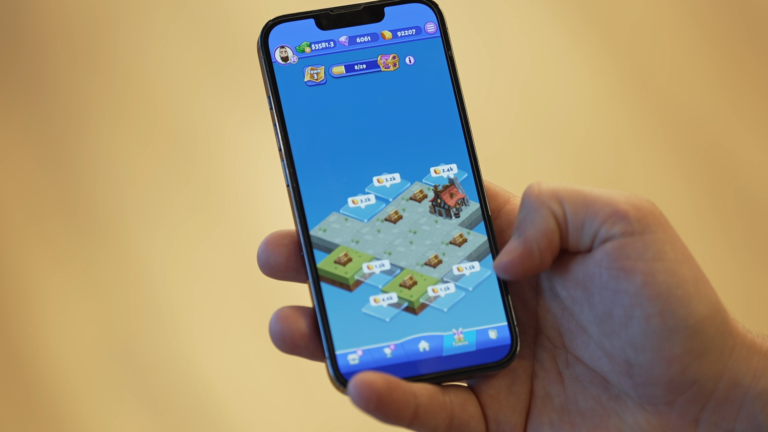
I think Connected TV (CTV) is going to keep getting bigger. Almost everyone I know watches TV while being on their phone at the same time. That multi-device consumption is only going to grow. I think CTV has the potential to become a standard growth stream this year that wasn’t fully utilized in the past. There are technical hurdles to sort out, but that’s where we’re heading.
Tekken. I got my first PlayStation in 1998 and started with Tekken 3. I’m proud to say I was playing Tekken 8 last night; I’m not as proud to say how late I was playing. It’s definitely my obsession.
I would love to master any musical instrument at a high level. I’ve been playing guitar for over 20 years, and my wife has bought me a mandolin, a harmonica, and a ukulele over the years. I’ve even tried drums and bass. I’m not embarrassed to say I am mostly terrible at all of them! I don’t think I have the part of the brain that gets you past “Knockin’ on Heaven’s Door.” There is lots of passion but zero potential, but I’ll keep playing anyway.