
|
RT 101
CHAPTER 1
Why Retargeting
You already paid for your next growth curve
Winning back the players you already own: who's worth it, what it should cost, and how to know it worked.

01
You already paid for your next growth curve
Currently Reading
02
Your ROAS is lying to you. Here’s the number that isn’t
READ NOW >>
03
Why 90% reach can be worth less than 40%
READ NOW >>
CHAPTER 1
WHY RETARGETING
You already paid for your next growth curve
The numbers you already know
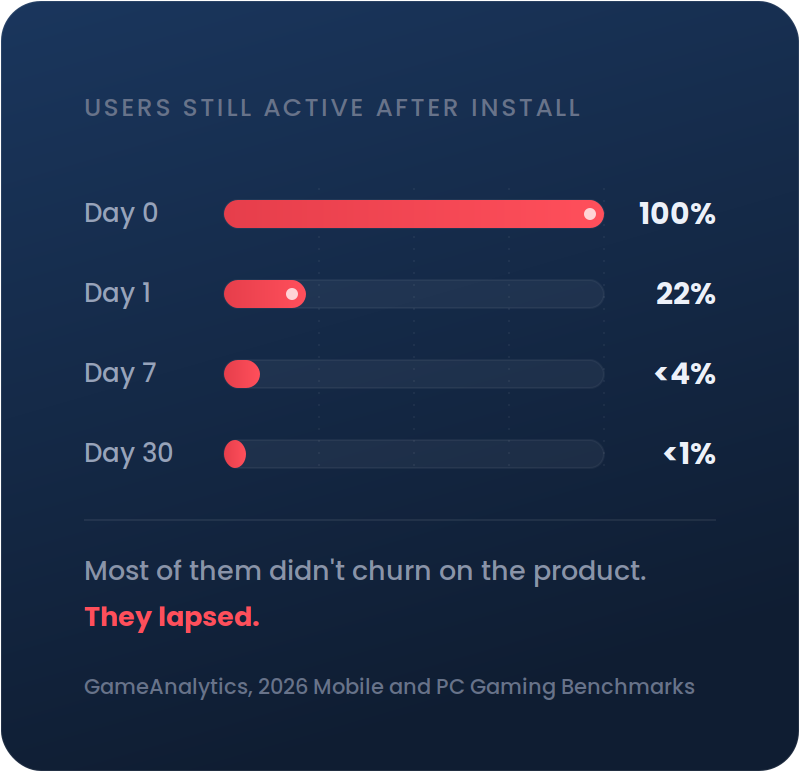
You know the retention curve. D1 at 22%, D7 under 4%, D30 under 1% (GameAnalytics, 2026 benchmarks, 16,000+ live games). Nothing new there.
What’s worth a second look is what those numbers do to the budget. Most of the users a UA dollar buys are inactive within a week. And most of them didn’t churn on the product. A new title launched, life got busy, the icon slipped off the home screen. They lapsed.
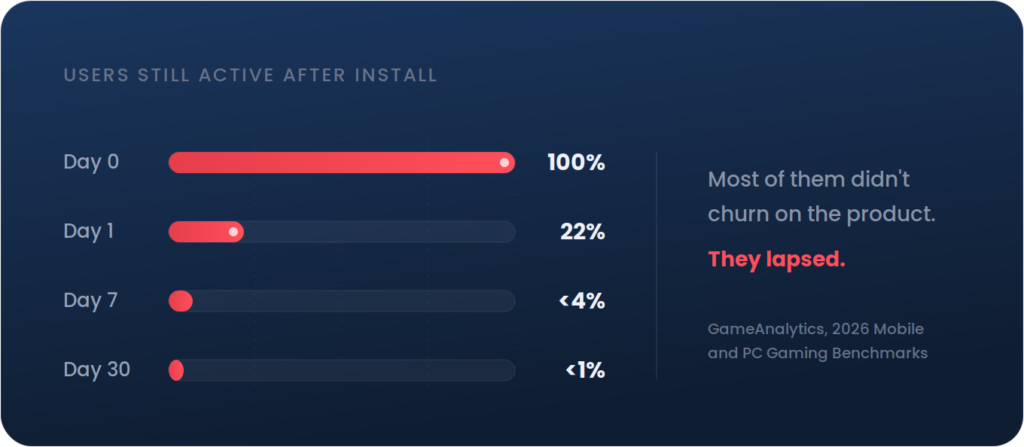
That’s the case in one sentence: it’s easier and cheaper to re-engage a user who already knows your game than to find the next install who might pay. Which makes retargeting a must, not a nice-to-have. The open questions are the ones this course is for: how to approach it, how to measure it, how to set targets, and how to run incrementality.
What a retained user really costs you
Take your last UA campaign. Divide the spend by the users still active at D30. That’s your effective cost per retained user, and it’s the number CPI hides.
The math is brutal. At median D30 retention, a retained user costs you more than 100x your CPI. A $2 CPI becomes a $200 retained user. Even top-quartile retention pays about 60x.
That’s the arithmetic behind every “UA is getting expensive” conversation. CPI was never the problem. Retention is.
THE REAL ACQUISITION COST
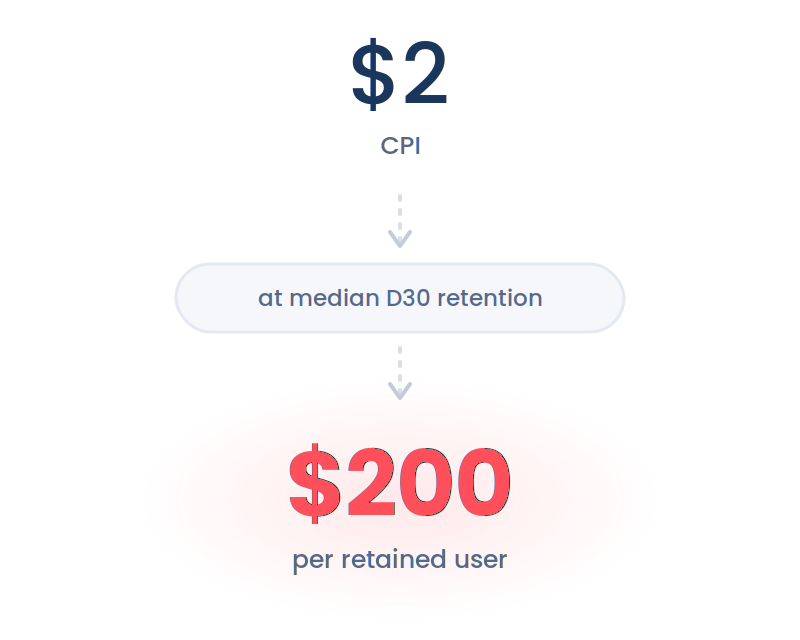

At under 1% day-30 retention, cost per retained user is more than 100x the CPI
Meanwhile, the budget keeps flowing to net-new users: audiences you’re targeting on thin, privacy-limited signals. Every quarter, most of the spend chases the users you know least, while the users you know best sit dormant. Across the advertisers we’ve analyzed, 25-40% of a typical install base is inactive for 30 to 90 days. Reachable, familiar with your game, and absent from your media plan.
Lapsed users come with first-party data attached
A new user is a modeled guess. Device, geo, and whatever the bid request carries.
A lapsed user is a first-party profile: install date, session history, level progression, purchase history, abandoned purchases, the creative that converted them, their play windows. Every session generated exactly the data that predicts re-engagement probability and expected value.
A STRANGER IS A GUESS.
A LAPSED USER LEFT DATA.
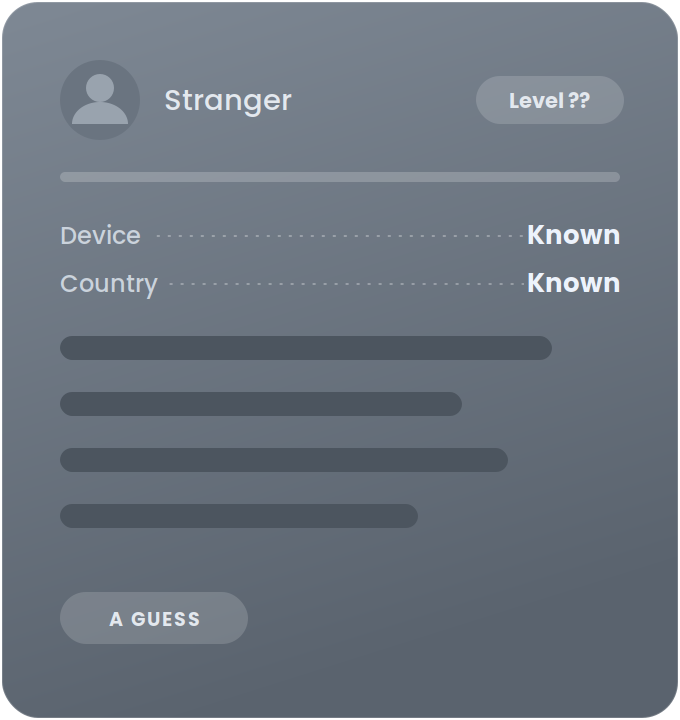

*ILLUSTRATIVE EXAMPLE
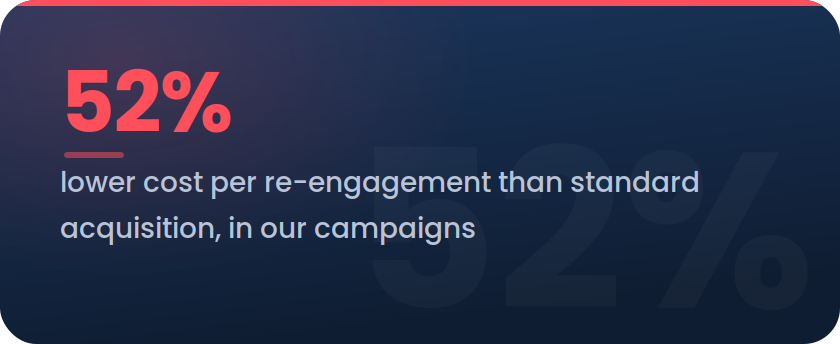
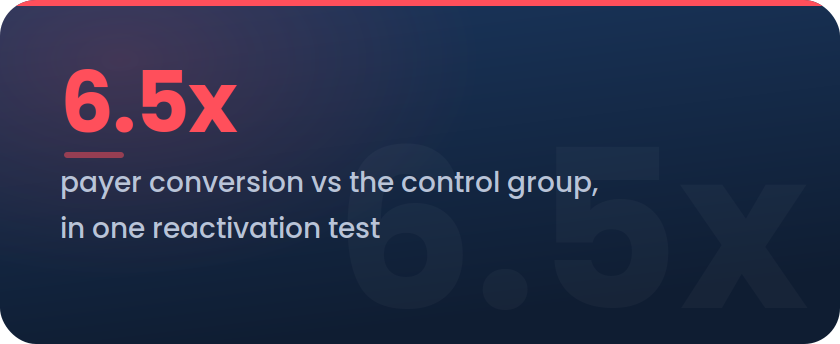
That data edge is why re-engagement, done right, is the cheapest incremental growth most studios never run. In our campaigns, cost per re-engagement has come in 52% below standard acquisition. In one reactivation test, payer conversion ran 6.5x the control group.
And payers are the point. Only about 5% of players ever convert to payers (AppsFlyer), and they carry nearly all of IAP revenue. A proven payer, dormant at day 45, isn’t a churn statistic. It’s the highest-intent segment your budget can reach.
The market already moved
This isn’t a tactical trend. It’s where the revenue went.
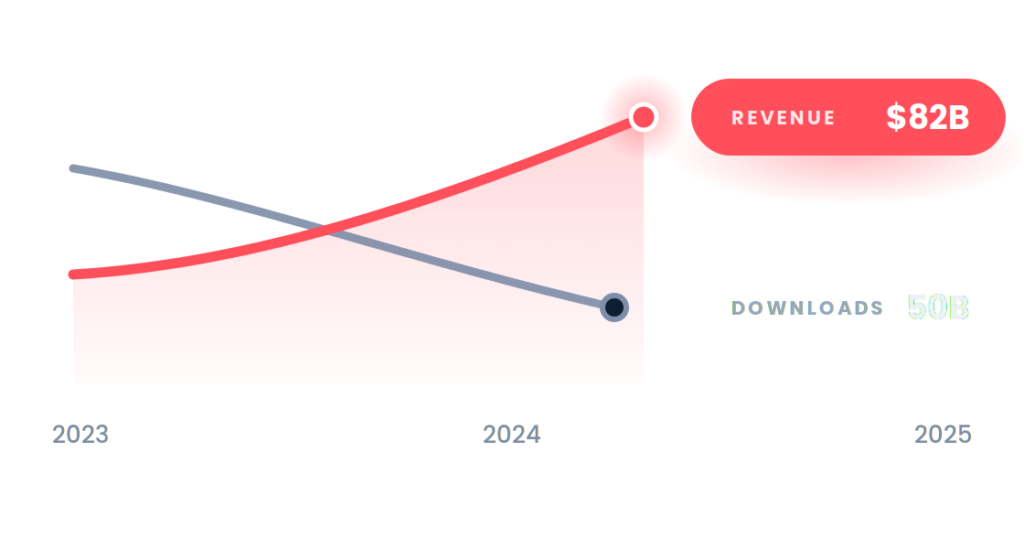
Downloads have declined two years running, down to 50 billion. Revenue held at $82 billion (Sensor Tower, State of Gaming 2026). Shrinking top of funnel, stable revenue: the value concentrated in existing players. Sensor Tower’s own conclusion: retaining, engaging, and monetizing existing players is more critical than ever.
FEWER DOWNLOADS, MORE REVENUE PER DOWNLOAD
Downloads 50B (−7%) · IAP revenue $82B (+1.4%)
Sensor Tower, State of Gaming 2026
UA still matters. It wins the player, and retargeting makes that win worth more. But acquisition alone is flattening: CPIs climb while every competitor bids on the same users. Your second growth curve is already inside your install base, acquired and paid for.
Done right means four things
Reach, price, engage, measure.
1

Reach
Reach the users organic re-engagement won’t bring back. Push and email only reach users who still opt in, which is precisely not the problem. The valuable ones are in other apps’ inventory now, and on iOS, reaching them post-ATT takes real technology.
2

Price
Price with real prediction. Most lapsed users aren’t worth a bid. Blunt segmentation overpays for users who would return organically and underbids the high-LTV users who need convincing. Every event you share sharpens the pricing.
3

Engage
Engage with re-engagement creative, not recycled UA assets. A returning user knows your game. “Come back, here’s what’s new” is a different craft than “try this game,” and UA creatives underperform at it consistently.
4

Measure
Measure incrementality, not attribution alone. Some lapsed users reactivate organically, and any campaign will take credit for them. Separating paid re-engagement from organic return is what protects the budget.
The catch, and it’s a big one
How much revenue did retargeting actually create, and how much was organic reactivation? Attribution won’t tell you. That number decides everything, and it’s the next chapter: Your ROAS is lying to you. Here’s the number that isn’t.
Already running retargeting? Chapter 2 is how to prove what it’s actually adding.
With the right measurement, retargeting isn’t a leap of faith. It’s a growth channel you can prove.

RT 101 is written by Bigabid, the retargeting DSP for mobile games. No fluff, no black boxes.
New chapters land in your inbox first, and the course area updates the same day.